
It’s not much of a tail, but I’m sort of attached to it.
Milne, A. A., & Shepard, E. H. (1989). The world of Pooh: the complete Winnie-the-Pooh and the house at Pooh Corner. Toronto: McClelland and Stewart.
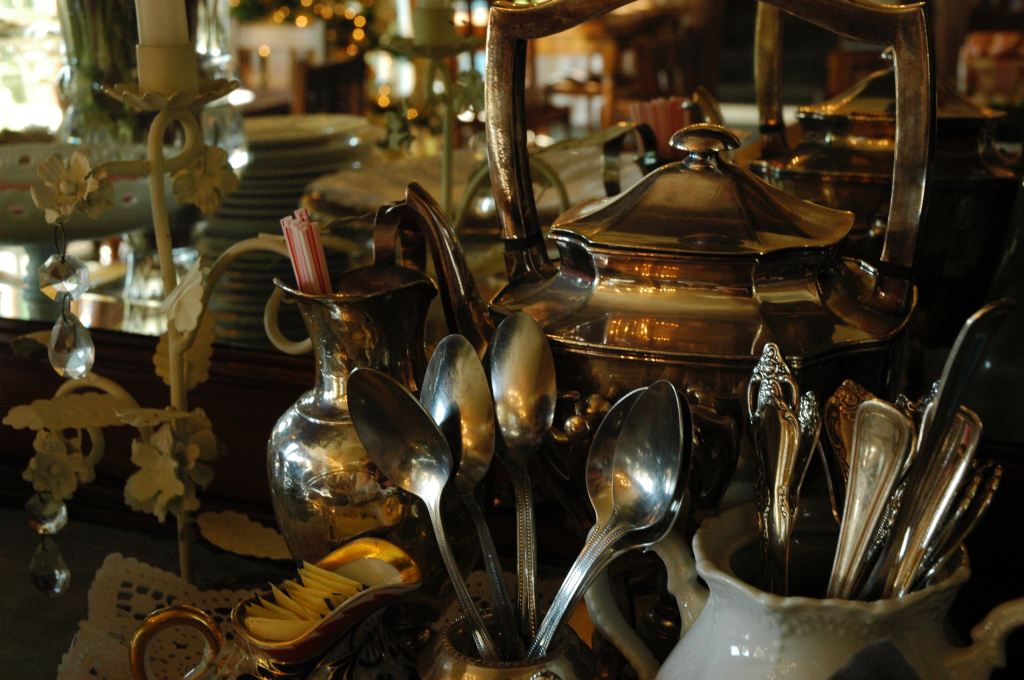
Shout out to all my ‘Spoonies’ reading this! If you understood that term, props to you if you didn’t, tune in for a bit of an education. For people with chronic illness, balancing life and health can be a challenge, to say the least. This is where we introduce “the Spoon Theory”, an essay based on personal experience, written by Christine Miserandino and published on a site called But You Don’t Look Sick, which is where I first discovered it. This website was a godsend when – I know I say this a lot – I first got sick. The Spoon Theory was the Bible. Miserandino was Jesus. I was her disciple… her text made me fangirl like only an OG 1D fan can understand. I fangirled because I finally felt like I wasn’t alone in this. Other people have illness. Other people understand. It’s like when you’re gossiping with your best friend and as soon as you have beef with someone, they pull out the sword and are ready to duel on your honour. Solidarity sister! All anyone wants is a little acceptance and a little understanding. And in the case of soul sisters, some blind hatred for people they know next to nothing about.
Christine Miserandino suffers from Lupus and she produced the Spoon Theory in 2003 when she was in her college years, she is, therefore, youth with chronic illness. Lupus is a systematic autoimmune disease where the immune system attacks your tissues and organs. With lupus, inflammation can affect different body parts and systems like the joints, skin, kidneys, blood cells, brain, heart, and lungs, but you also risk infections and more. It can be difficult to diagnose for several reasons including mimicking other condition’s symptoms. As for causes, you can be born with a lupus tendency that can be triggered by infections, certain drugs, and even sunlight. Unfortunately, there is no cure for Lupus which means for most cases it’s a life-long battle in which you must simply take every day as it comes, as is often the way with chronic illness.
The way Miserandino explains chronic illness is through a metaphor where she refers to the energy of those with chronic illness as spoons. Every day you have a set number of spoons, and every activity you partake in, you lose a spoon. Now, this isn’t as simple as it seems. To you, these activities probably seem like getting ready for school, going to school, going to lunch, maybe an afterschool activity and then there’s always homework and getting ready to sleep…maybe a few hours of Netflix. This is what I always think of when I think of the regular teenage school routine. It’s different when you’re sick. All of these activities considered mundane and regular are a marathon that we’re trying to run with a twisted ankle.
Getting out of bed is an Olympic event. For myself, it takes at least an hour to muster the strength to sit up in the morning. It’s not just because I’m lazy, I physically cannot move. Just the other day my friend took my phone to set an alarm for when she had to leave, and in doing so she saw my regular alarms. The shock on her face when she had to scroll was what I would look like if all of a sudden, a school of baby Ewoks took over my backyard. Baby Chewbacca oh my. You can imagine there are a lot of alarms. No, I’m not just a heavy sleeper. I am sick. My energy levels are immediately affected by everything that’s not functioning in my body, in other words, chronic illness has made me relate more to Eeyore than Winnie the Pooh.
While getting ready is as simple as getting up and dressed, doing your hair, you know basically everything from Quinn’s performance of I Say a Little Prayer For You or Ke$ha’s own TiK ToK (not the new Musical.ly, I repeat not the new Musical.ly) for people without illness. With illness, it is more complex. Assuming you get out of bed that morning, and at a time close to one of the alarms, there are now a lot of decisions to make. Can I eat or am I nauseous? Do I have medicine to take? If I have medicine, I need to eat. Am I strong enough to take a shower? Standing for that long will take a lot of energy. Am I even well enough to go to school today? Okay, let’s get dressed. How is mobility? Can we work with buttons today? Are you strong enough to lift your jumper above your head? Why do we wear laces? My hands are shaking so much. Now I’m too hot for a jumper. Now I’m too cold. It’s hot again. Did I take my meds? What am I forgetting? Shoot, late for the bus. Shaking at the bus stop. I’m going to miss the bus. Wait did I lock up? Did I even pack my keys? What did I forget? Oh, the bus! That step is so big. Shoot I forgot my homework. Too late now. At school. Can’t lift my bag. The bus is going to leave. The bus is leaving. The bus left. I’m still on it. Ask for help. Can’t. Frozen. Stop button. Now I have to walk further. Will I make it the day?
That is a bleak example of the common thought process experienced by people with chronic illness. What starts as what should be a simple go-to split decision escalates into a million micro-decisions and next thing you know; you’re having an existential crisis. This thought process expresses the mentality of many people with mental illness. It also explains, to an extent the Spoon Theory. We have spoons. We use them for the most mundane of activities like clothing yourself. Being a ‘Spoonie’ means you are less able to do things as everyone else can. Sometimes you have to try harder than the majority. Sometimes you can’t even try. That’s okay. We do the same things; it just takes more out of some than others. When I first read the Spoon Theory, this finally made sense to me. Now I try to introduce it to everyday life.
This is a difficult concept to understand, consider it to be like Harry Potter where they introduce the magical universe. It’s a whole new world to understand and develop. And of course, muggles know nothing of this world. Until they are introduced to it. If you are a muggle in terms of Spoon theory, I hope I introduced a bit of this world to you.
My name is Amelie and I am a ‘Spoonie’.

References:
(2009, November 14). Retrieved from https://www.youtube.com/watch?v=iP6XpLQM2Cs
20th Television. (2009). Retrieved January 25, 2020, from https://www.youtube.com/watch?v=r5rli1PnsoU
But You Don’t Look Sick? The Spoon Theory. [PDF File]. Retrieved from https://cdn.totalcomputersusa.com/butyoudontlooksick.com/uploads/2010/02/BYDLS-TheSpoonTheory.pdf
ButYouDontLookSick.com. (n.d.). Retrieved from https://www.facebook.com/bydls/posts/10157956935269729?__xts__[0]=68.ARBsQwLV-
Lupus. (2017, October 25). Retrieved from https://www.mayoclinic.org/diseases-conditions/lupus/symptoms-causes/syc-20365789
Schultz, K. (2019, April 18). What is Spoon Theory? Retrieved from https://www.healthline.com/health/spoon-theory-chronic-illness-explained-like-never-before#7
 Little Spoonie